Head Venture: a first look before the demo
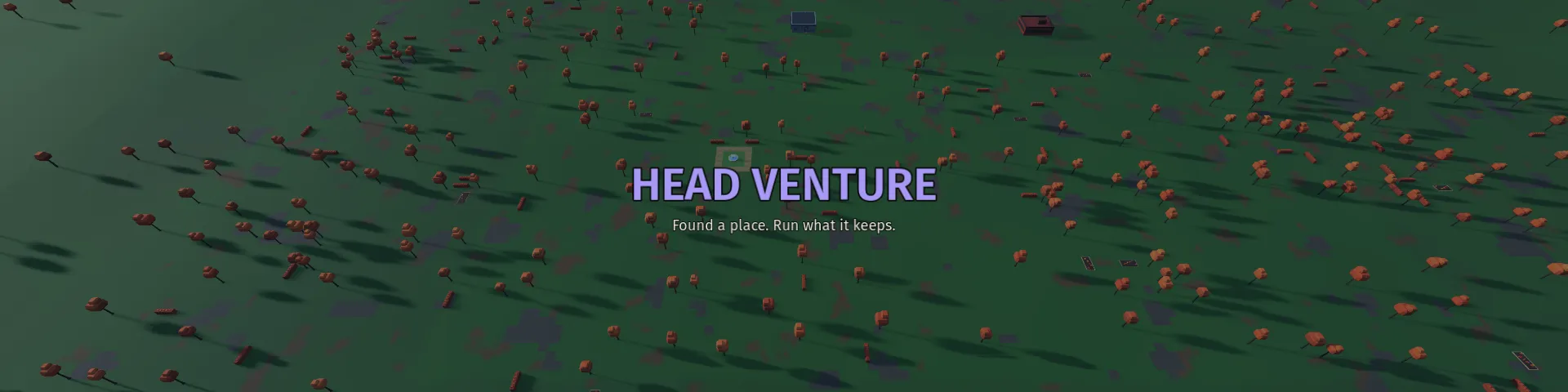
Head Venture is the game I’ve been building in Godot: a management sim where you start small and run the ventures your company keeps. The first public demo, 0.9.0, is close, so here’s what it is and what’s in it.
The idea
You are the Head. You start with funds and a site, and nothing on it is yours. You lease or buy a lot (often with a shop or an apartment already standing), hire people, set the roster and the budget, and open a small venture: a café, a tailor’s, a hotel, a school. Then you grow from there, through seasons and years, running one venture or several at once.
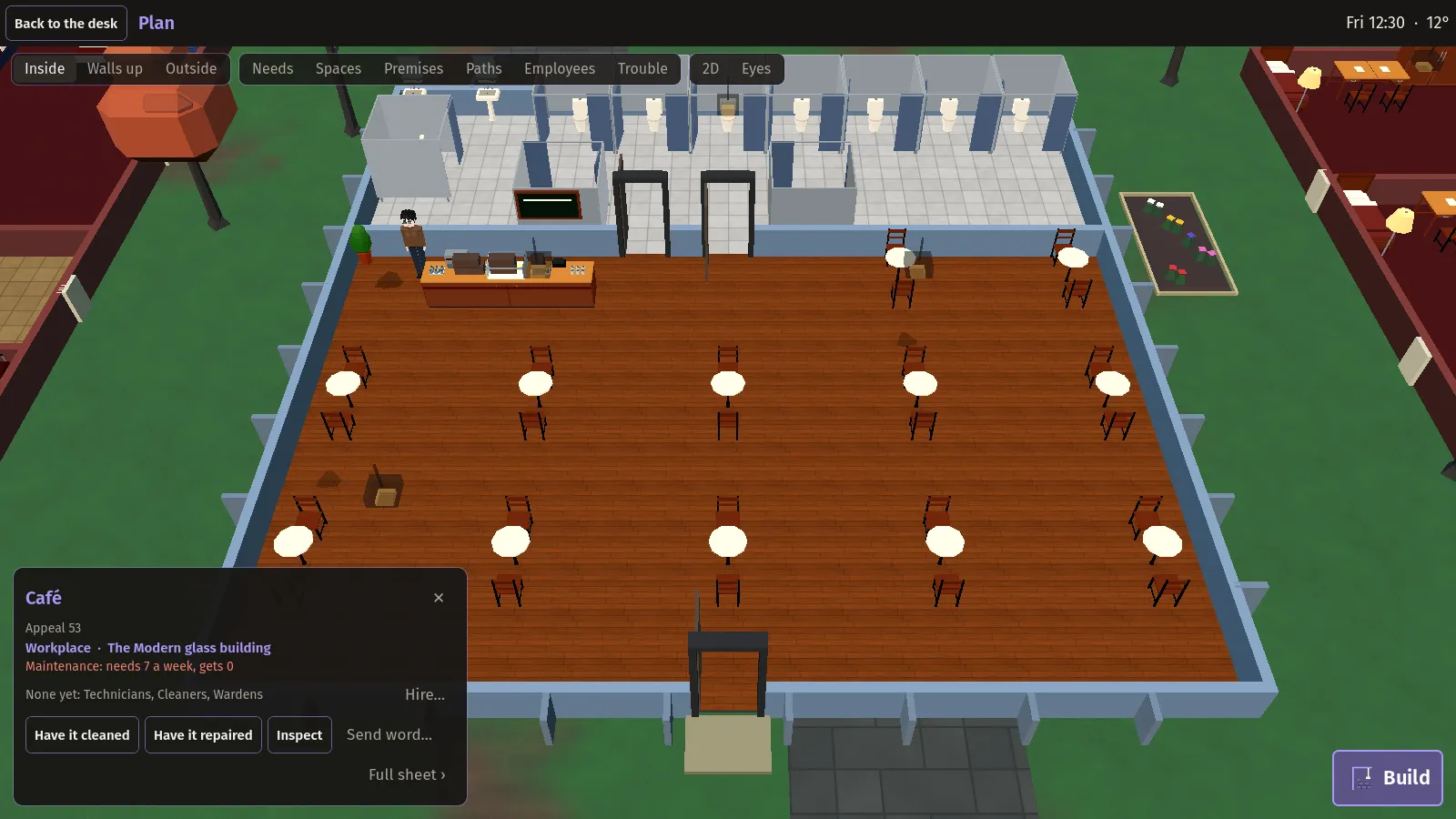
You don’t only run it from menus. You walk the site on your own feet with a phone in your hand, sit at a PC to run the company from a plan view, and look through your own eyes when you want to.
Everyone is simulated
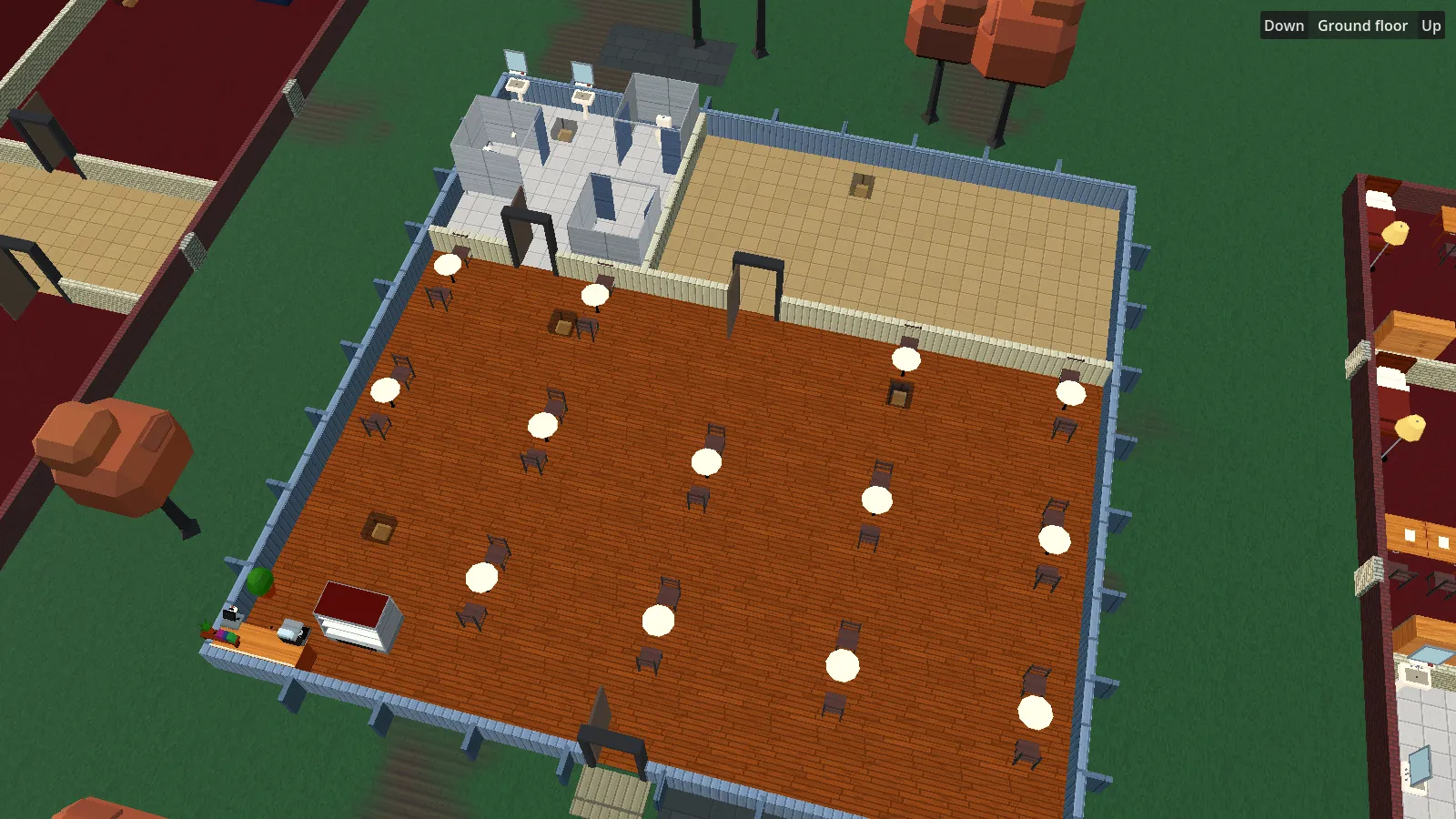
The part I care about most: every person on the site has a life. Patrons have needs, wants, friendships, rivalries and plans. Staff have moods and skills. Cleaners go to the mess, technicians mend what breaks, cooks cook from what’s in the fridges, and builders put up what you draw. Time runs at a pace you can follow, with pause and four speeds, the slowest slow enough to watch everyone at work.
What’s in so far
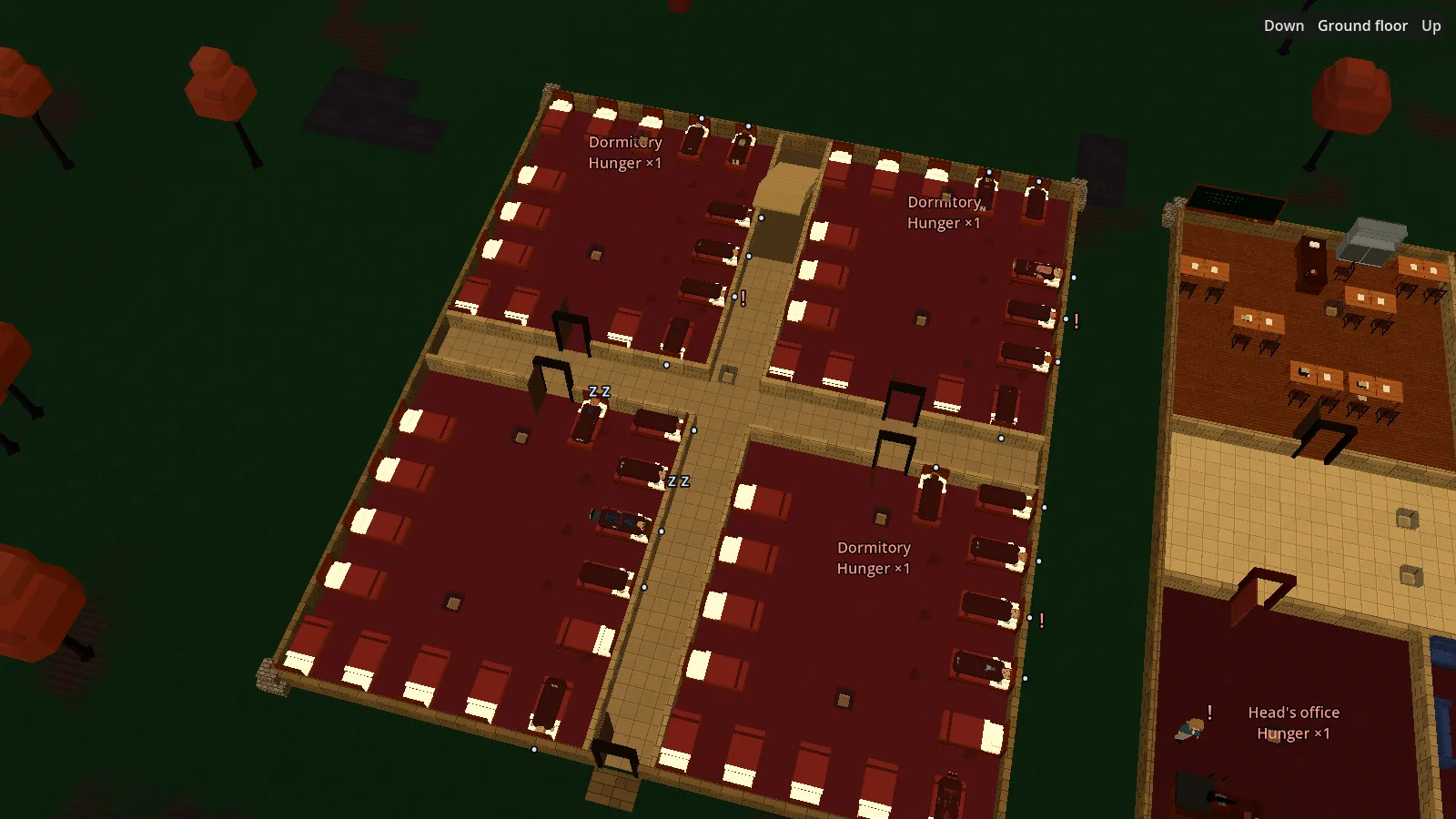
- Over thirty ventures, each with its own page and growth track: school, hotel, café, restaurant, spa, shops, a clinic, a bakery, housing to let, and more. Several can run at once, even one inside another.
- Building on a grid: floors above and basements below, rooms that become what their furniture makes them, walls at 45 degrees, blueprints to copy and paste. Materials arrive by road and builders put them up.
- Running the week: paint each venture’s schedule and every shift hour by hour, set prices and rules, keep the kitchen stocked.
- Answering to people: families, the city, patrons, rival companies, and a board that can vote you out.
- Stories and quests, starting with a struggling café.
Built to be changed
Ventures, settings, text and numbers are data in swappable content packs, not engine code. The same game can be a modern city, a compound, a tower or a ship, depending on the pack. Even the art is the game’s own look made in code from simple forms, and a pack can replace any piece of it. How that’s built is in the project write-up.
The demo
0.9.0 will be on itch.io for Linux, Windows, macOS and the browser. It’s early access: everything is playable, but the audio and some of the writing are placeholders, and the numbers are still being balanced. Saves may not carry over between versions until 1.0. There’s a built-in “Report a problem” button that bundles your save and logs into one file, and nothing is sent anywhere by itself.
I’ll post here when it’s out.